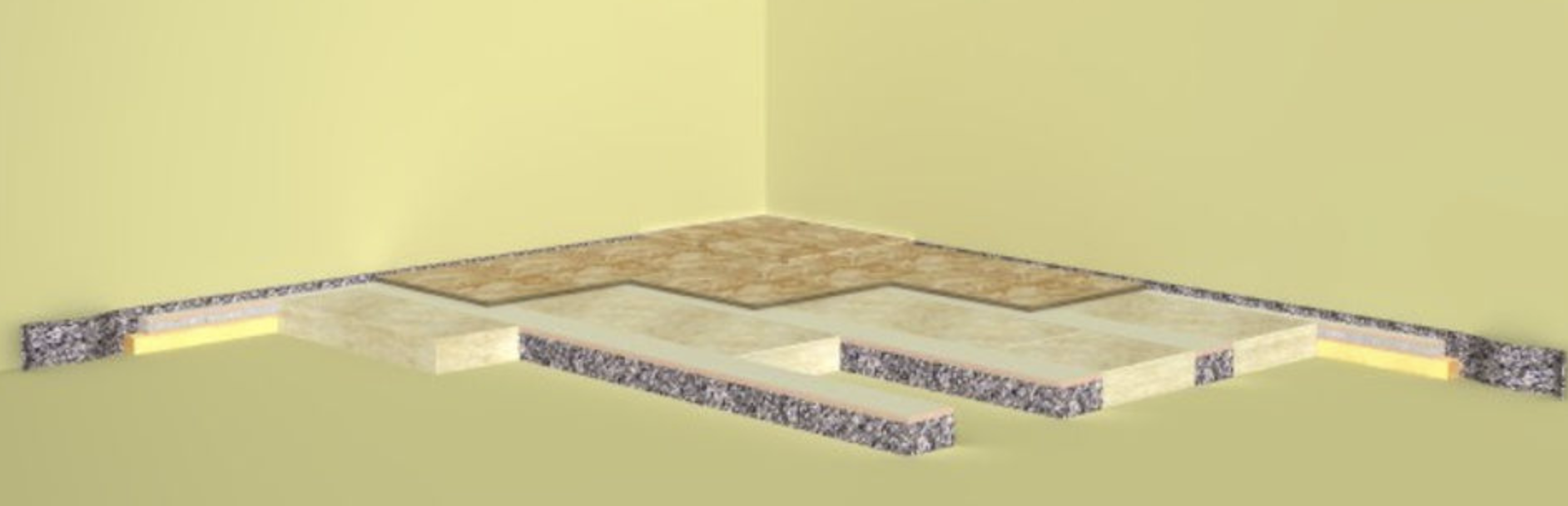
.png)
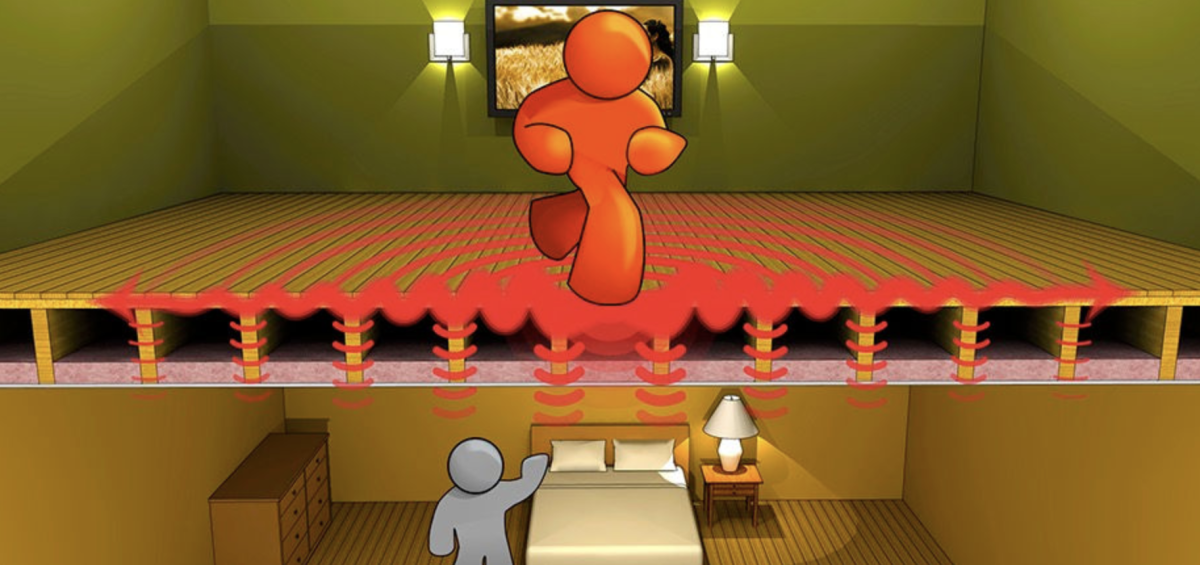
Soundproofing the floor is the simplest and most cost-effective way to reduce noise in rooms below, and soundproofing the floor also prevents sound from passing from below.
Macsound prof is your solution for floor soundproofing.
Currently, most people want to get rid of carpets and rugs on the floor in their homes, as they are excellent dust collectors with mites.
However, once the carpets are removed, impact noise becomes more audible to the neighbours below.
Typical sounds that pass through the floor to the ceiling of the lower apartment include footsteps, voices, dog barking, vibrations, which can seriously irritate your neighbours.
Soundproofing the floor of your room can significantly reduce or eliminate noise transmitted through your floor and make your room quieter and more peaceful for those around you.
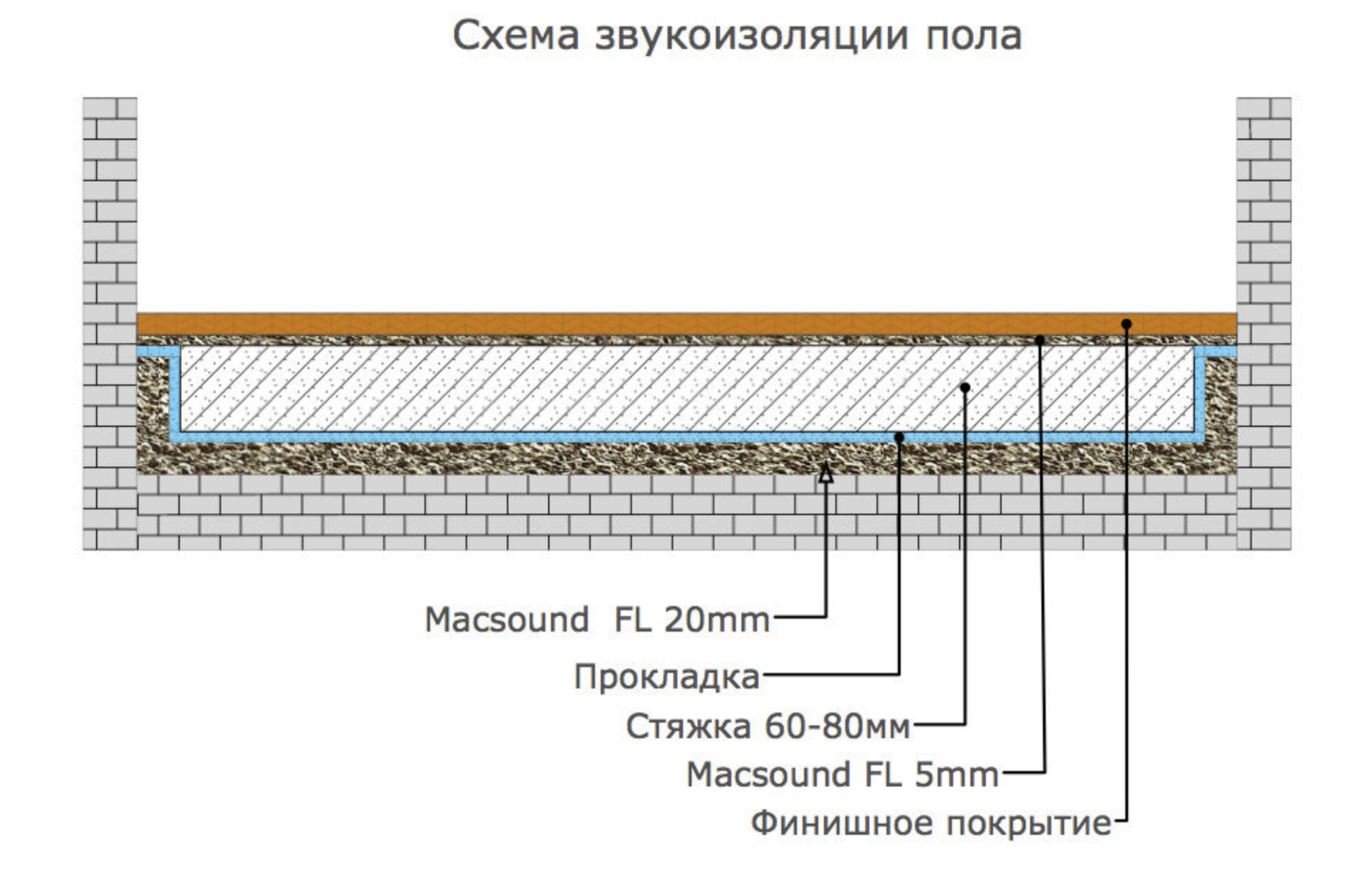
Materials for floor soundproofing:
1. Hard underlay materials
Sheets of hard underlay are used to add mass, which is the most effective element of soundproofing in blocking airborne noise, such as people's voices.
Materials usually recommended for use in a soundproof floor are:
- OSB (oriented strand board) - suitable for most purposes
- Fibreboard, MDF
- Plasterboard, cement board
For better noise reduction, the greater the density of the material, the better.
We strongly recommend using damping material like Macsound prof 10mm in conjunction with hard underlay materials between them.
Note that for the best soundproofing results per unit thickness, THREE thin layers of Macsound prof work better than TWO thick ones.
2. Dense elastic underlay materials
Elastic underlays are used as a separating material, which is the most effective element of soundproofing impact noise, such as footsteps, falling objects, or moving furniture.
Among many elastic underlay materials, the most commonly used are:
- Macsound prof
- Acoustic underlay fibre ecos x
- Cork underlay
3. Damping materials
Damping (attenuation) is a necessary element when dealing with low-frequency noise soundproofing issues, such as in music.
The standard material for attenuation is Macsound FL 5-10mm.
It is applied between two rigid panels, which are connected with screws, forming a layer of a constrained damping system.
As with underlay materials, the more layers, the greater the damping effect. For example, using three thin layers is better than two thick ones of the same material.
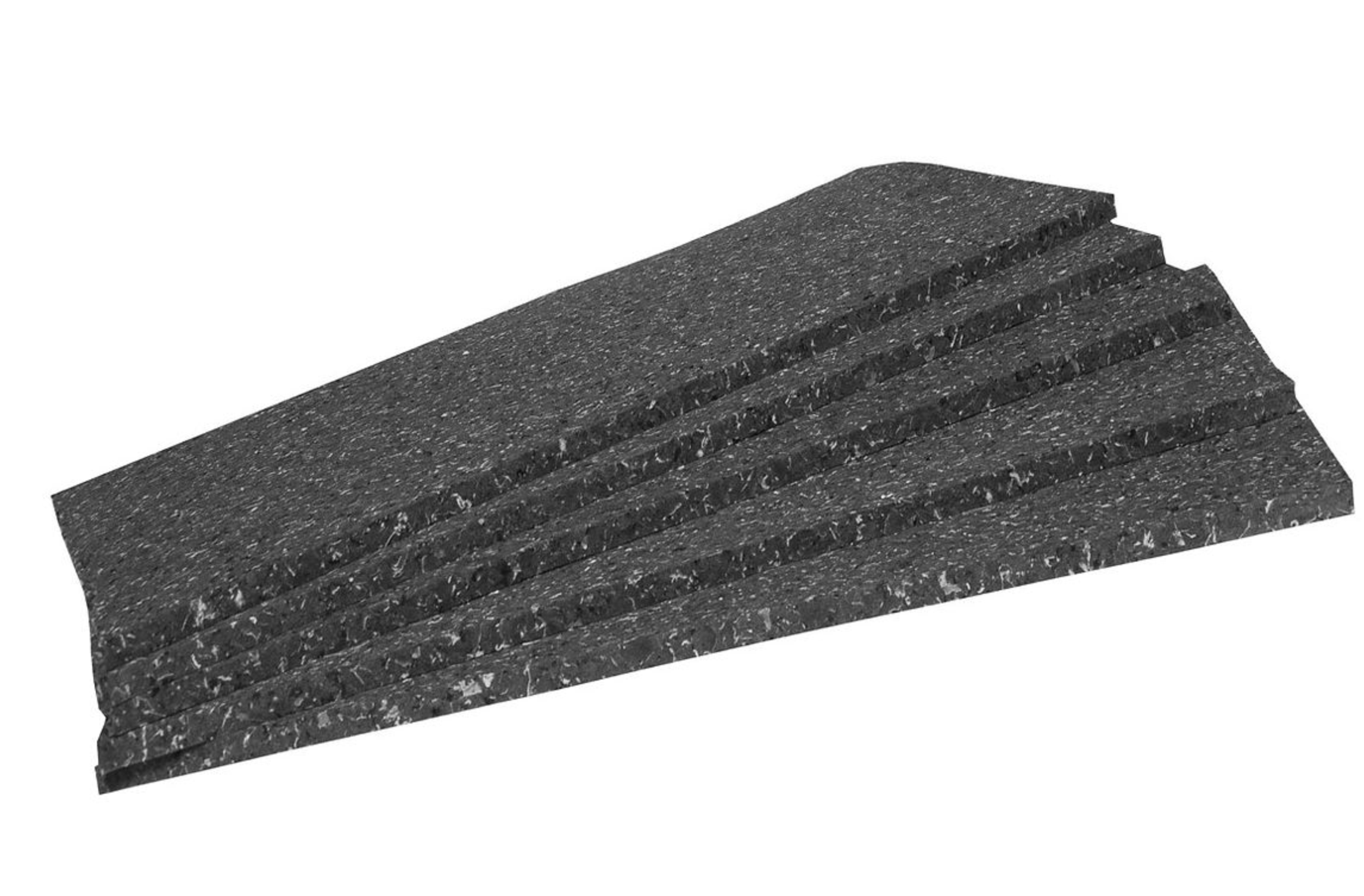
4. Acoustic sealants
An acoustic sealant is necessary for any soundproofing work, as it is used to fill all gaps and holes through which sound can pass.
The room where soundproofing is applied must be hermetically sealed on all sides because sound spreads like water, through all gaps and holes.
In the construction of soundproof floor systems, an acoustic sealant is used between the edge of the floor and the wall, so that the floor does not directly contact the wall, acting as an acoustic decoupler.